Diggers
Outdig the camp next door.
Poach the bones you need. A shedding lane battler for 2–4 rival paleontologists, played from a hand you can never sort. Race to empty it, but only the dig sites you hold when someone does will score.
- Players
- 2–4
- Genre
- Shedding · Lane Battler
- For fans of
- Scout · Schotten Totten
- Length
- 15–20 minutes · 3 field seasons
- Components
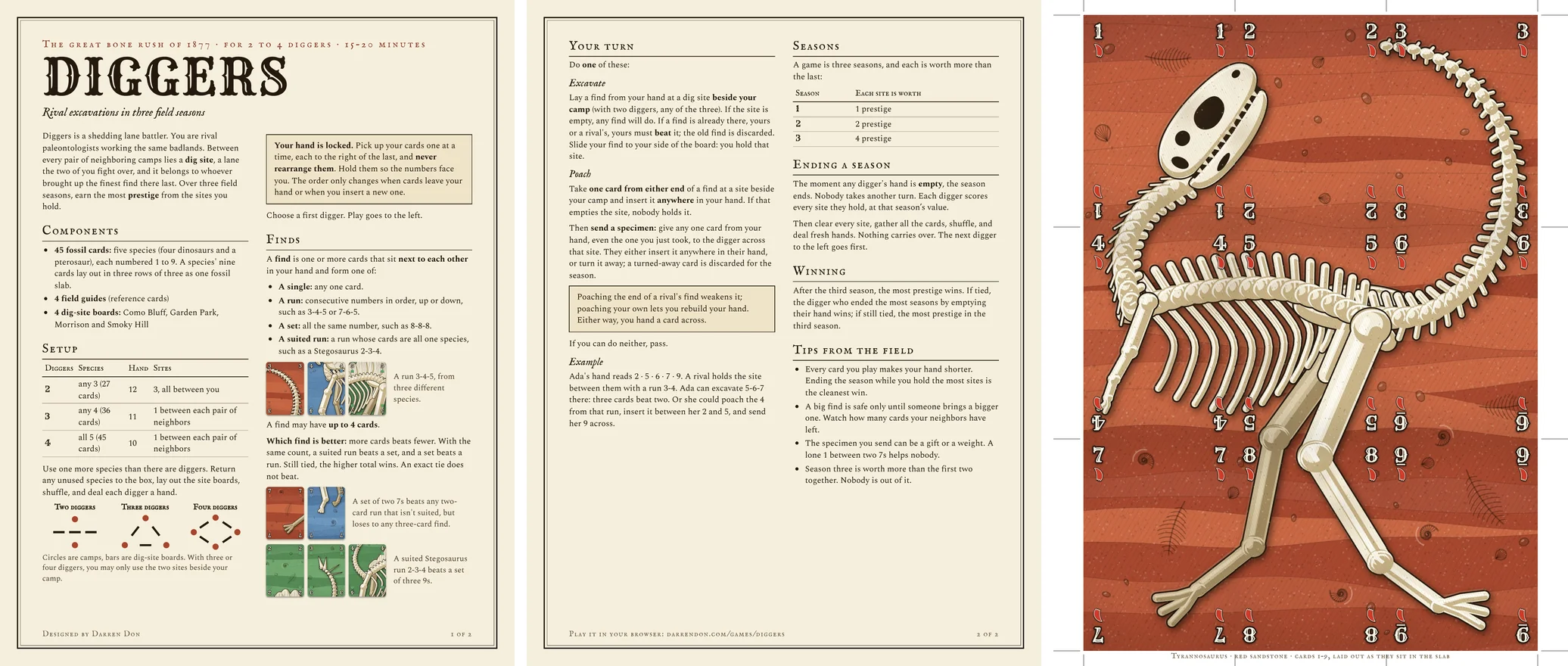
- 45 fossil cards, 4 field guides, 4 punchboard dig-site boards
- Box
- Tuck box
Overview
Dig it up before they do
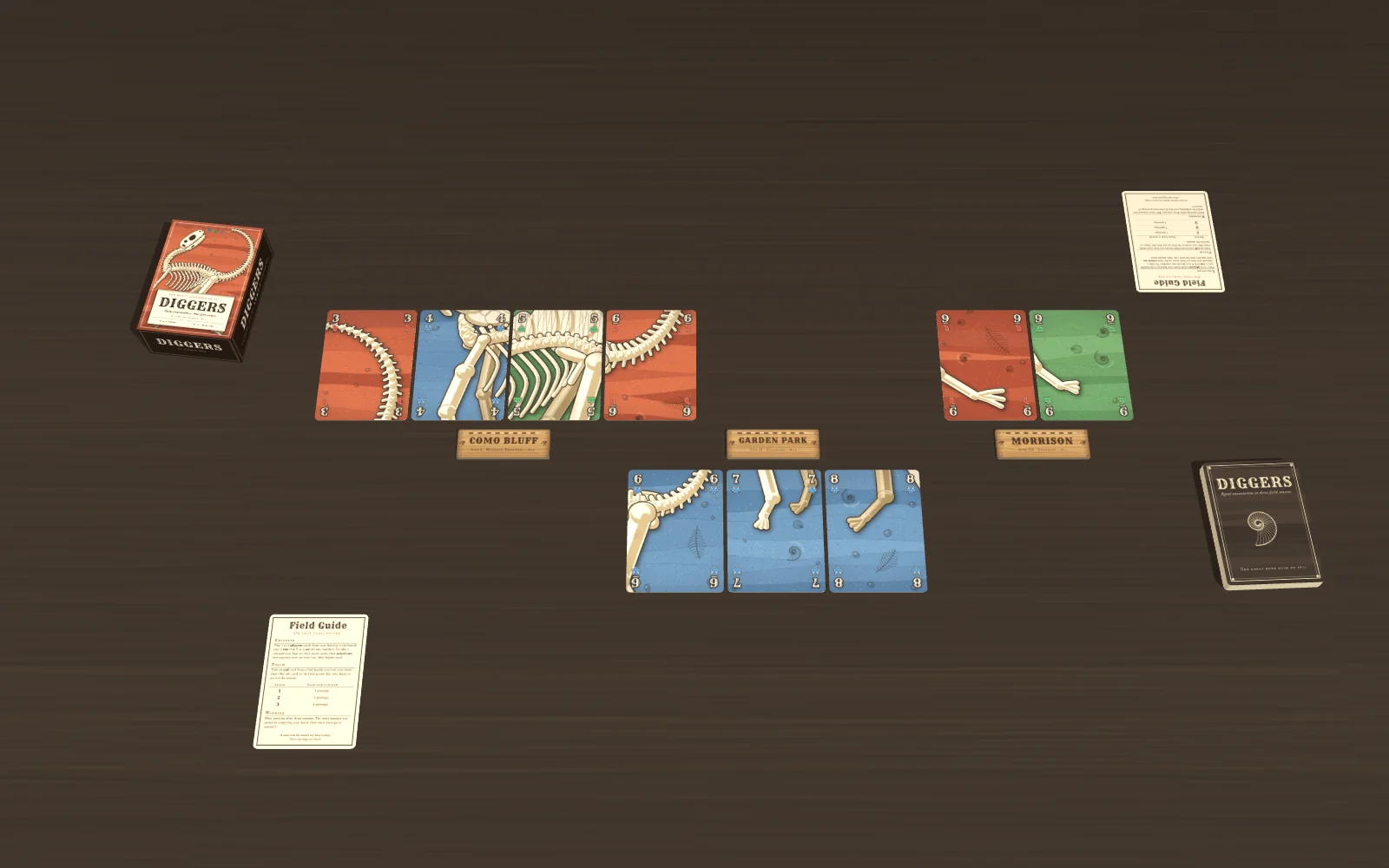
It's 1877 and the bone rush is on. Every pair of neighboring camps shares a dig site, a lane the two of you fight over, and it belongs to whoever laid the best find there last. You pick up your cards in the order they're dealt and never rearrange them, so the only finds you can play are the ones already sitting side by side. When the bone you need is on a rival's find, you take it. When anyone's hand runs out, the season ends and every site you hold scores.






More cards always wins. Same count? A suited run, every bone from one skeleton, beats a set, and a set beats a run. Then the higher total.


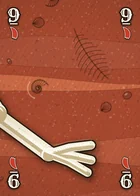 your side
Take an end bone off a rival's find and slide it anywhere into your hand, then send them a card back. They keep it, or it's out for the season. A good gift can be poison.



Play your last card and the season ends on the spot. Every site you hold scores: 1 prestige in the first season, 2 in the second and 4 in the last.
Components
Five skeletons, nine bones each
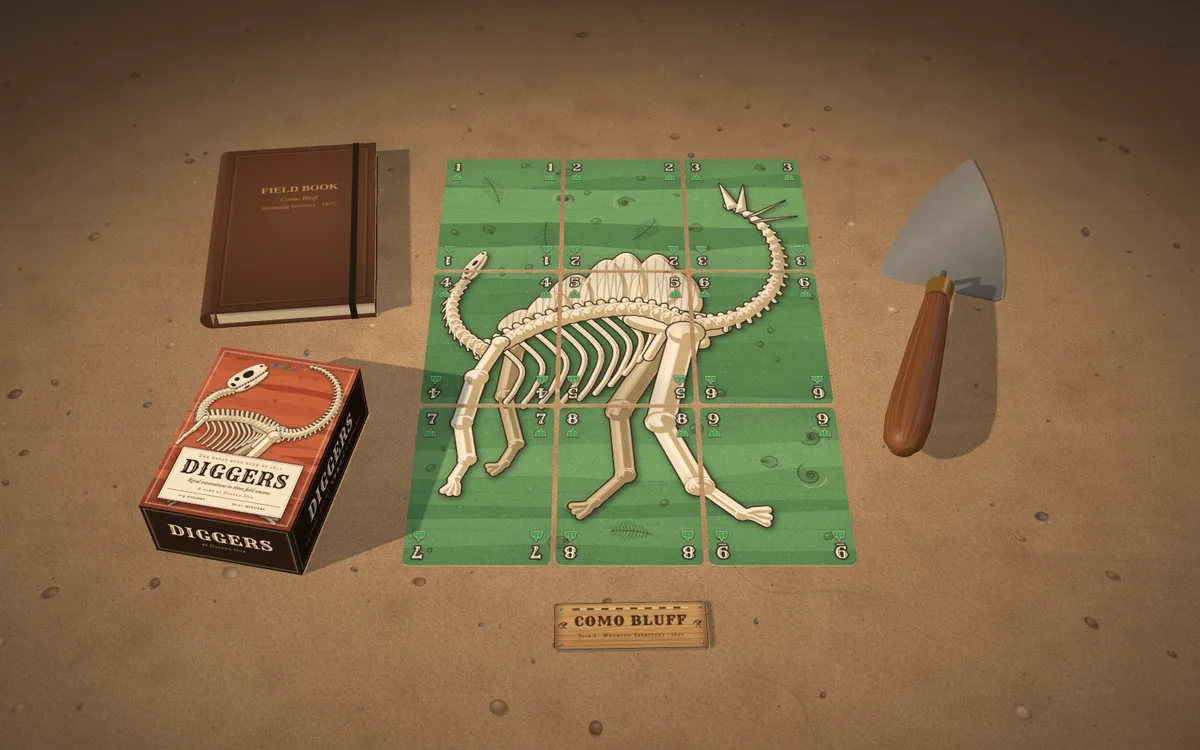
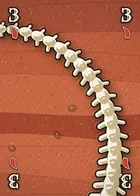
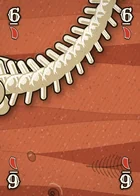
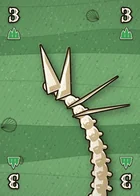
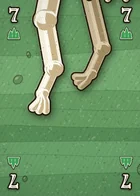
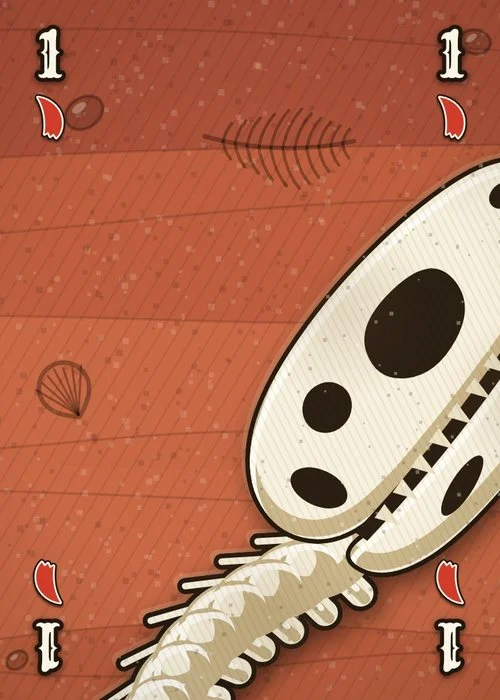
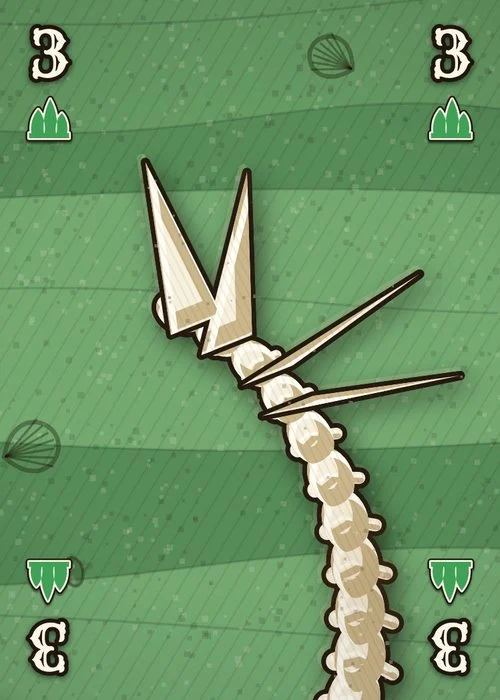
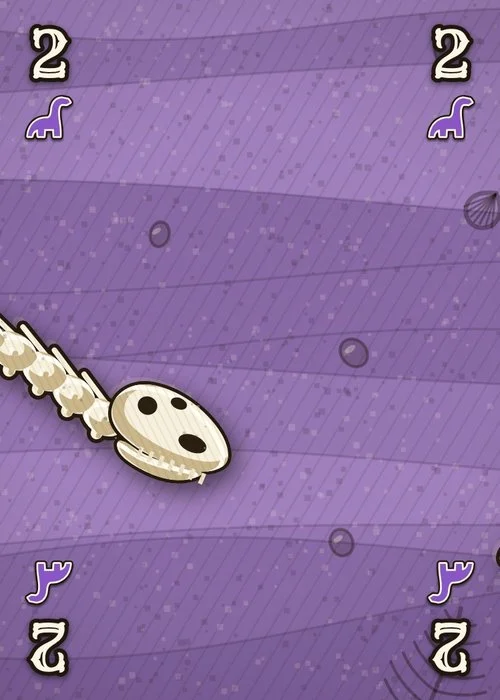
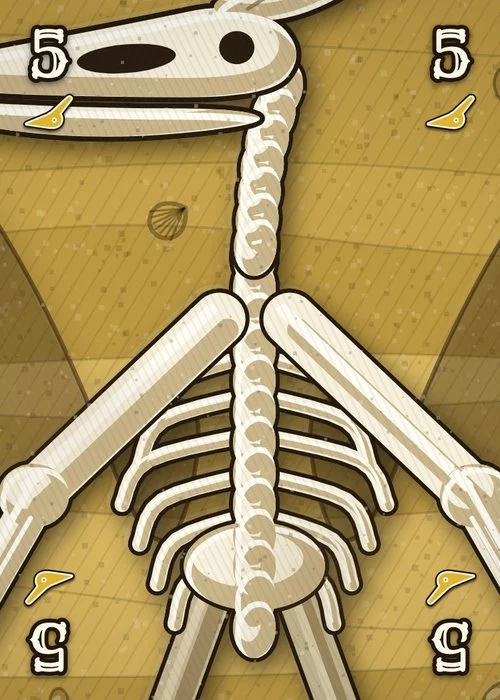
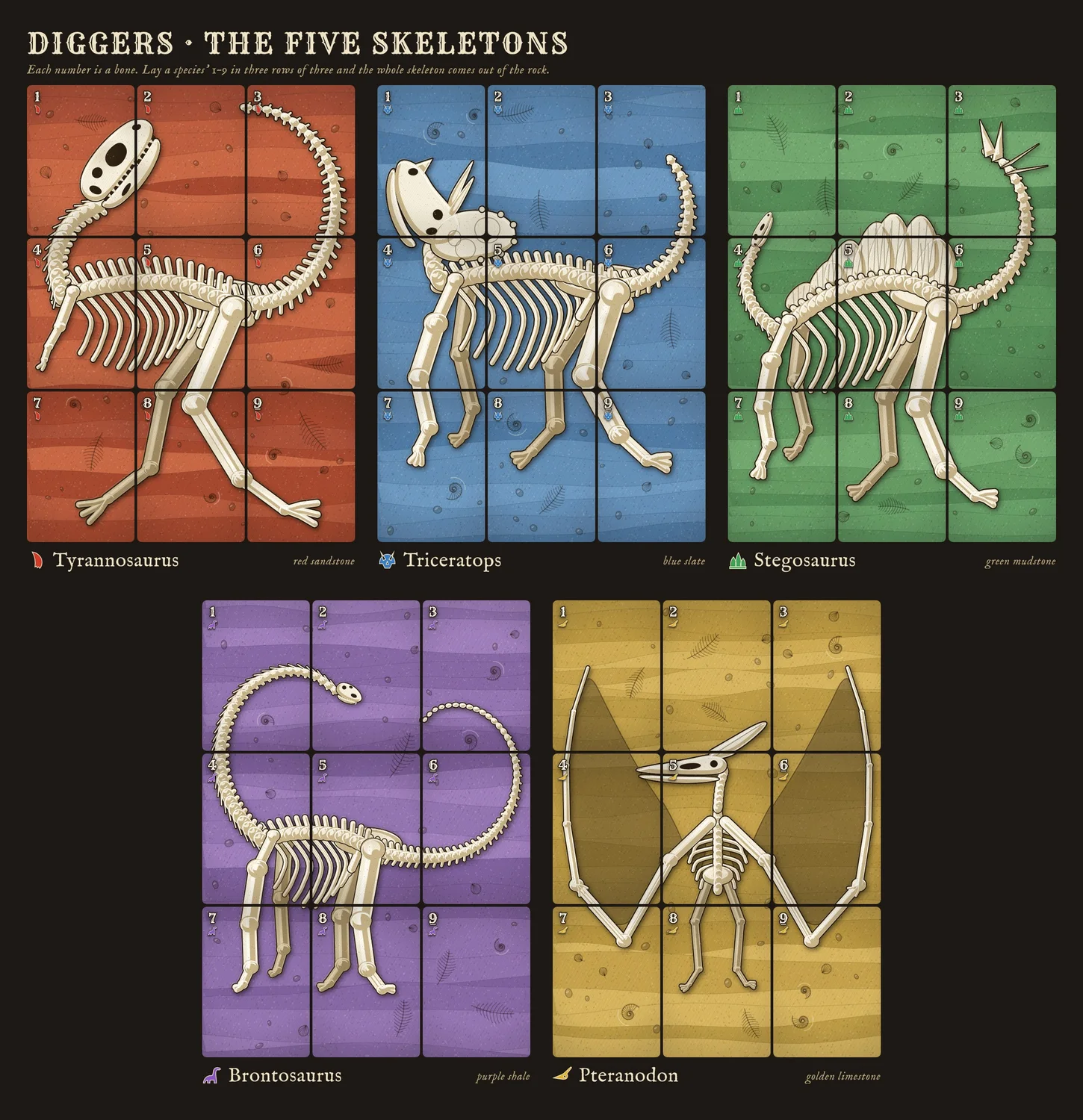
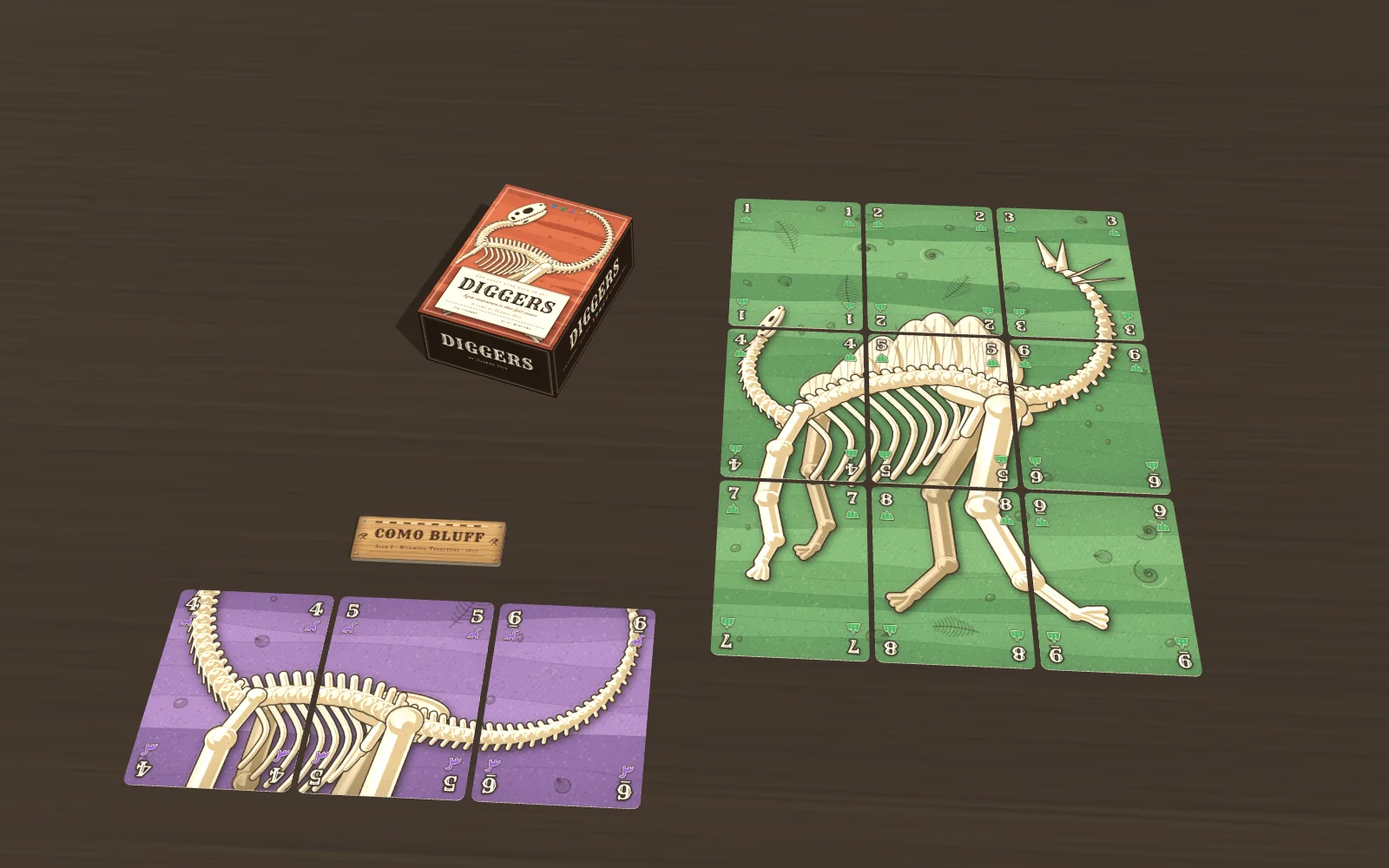
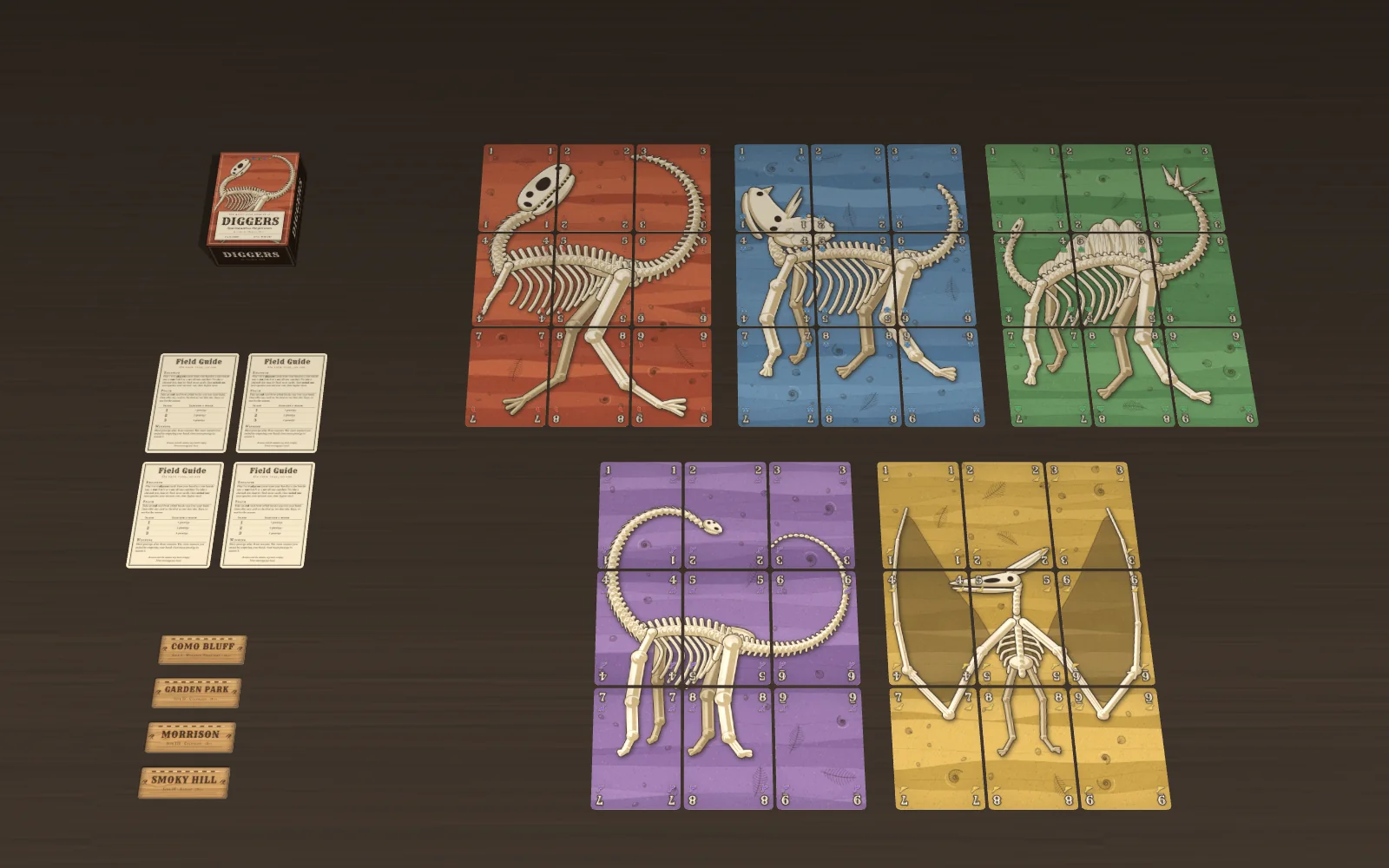
Every card is a bone from one of five animals, each set in its own rock with its own symbol. Lay a species' nine cards out 1 2 3 / 4 5 6 / 7 8 9 and the whole skeleton comes out of the slab. Each game uses one more species than there are players.

The dig sites
Four real quarries from the Bone Wars
Each site is a punchboard strip, the width of a card, laid between two camps. Your finds go on your side of it. The four boards are named for places where Cope's and Marsh's crews raced each other in the 1870s.
In the box
- 45Fossil cards, poker-sized: 1 to 9 in five species, number and symbol in all four corners
- 4Dig-site boards: punchboard strips 63 × 22 mm, the width of a card, so they pack with the deck
- 4Field guides with the turn and the season values
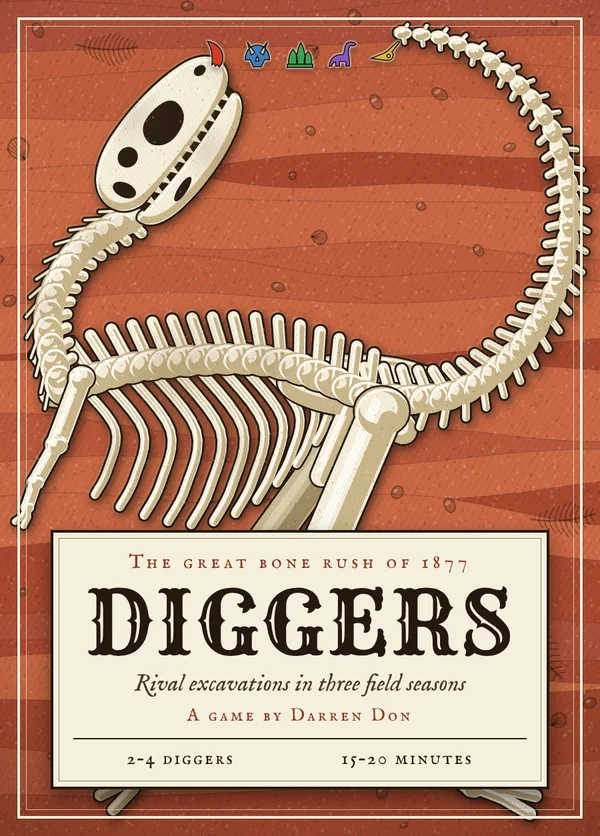
Mockups show a proposed production version in a poker-card tuck box, 66 × 92 × 32 mm.
Mockups
Rendered from the card, board and box art.
Play
Pick a camp
The game runs below. No download or account needed.
Sell sheet
One page for your review meeting
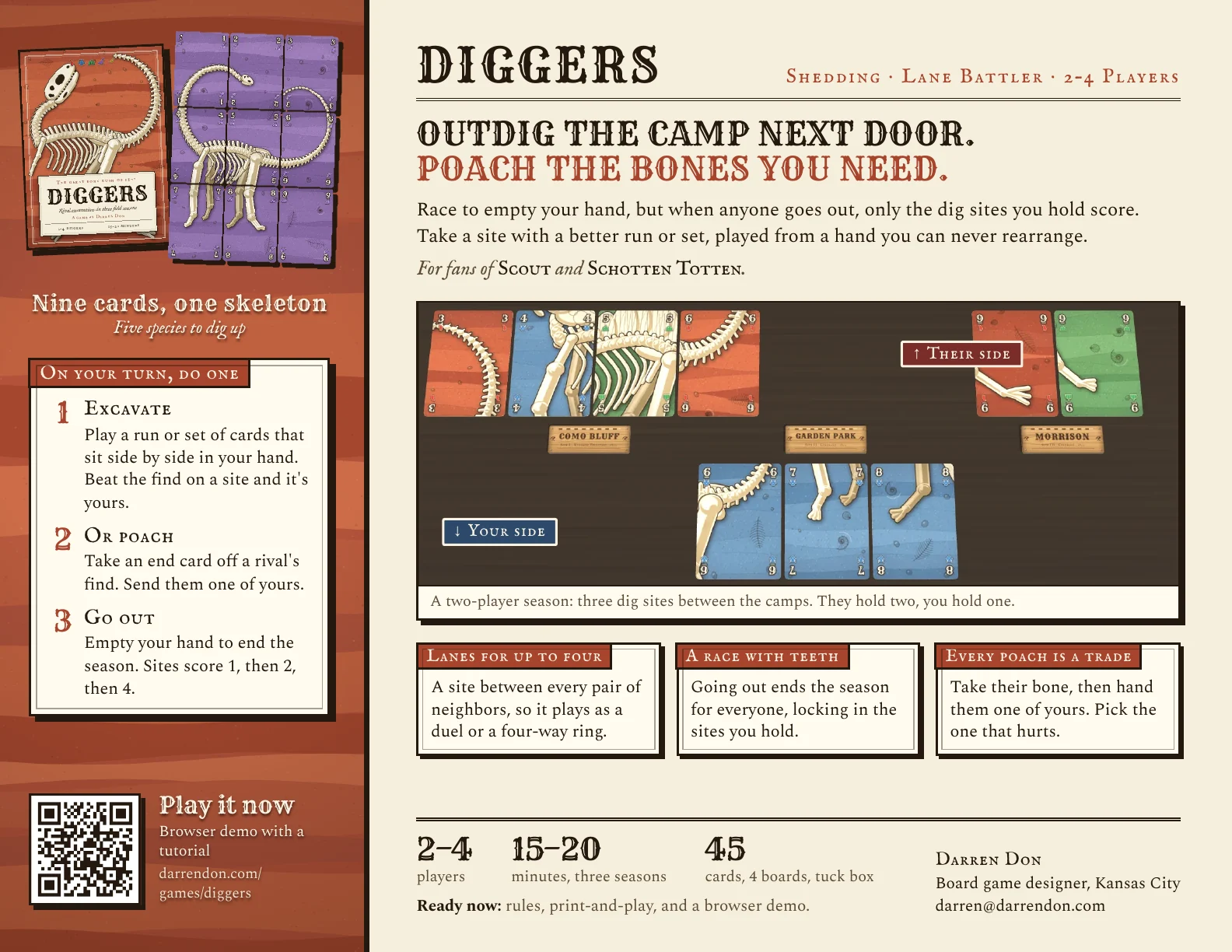
The hook, the game on the table, a turn in three steps, what's new about it, the numbers and a QR code to the playable demo, on a single landscape page ready to print or forward.
Print and play · on request
Want it on your table?
A ten-page kit: two pages of rules, one sheet of nine cards per species with crop marks, optional card backs, the four field guides and the four dig-site boards. Nothing else needed. Email me and I’ll send it over.
Setup
Each dig-site board is a lane between two camps. Use one more species than there are diggers. With two, play with three species and lay three dig-site boards between you; deal 12 cards each. With three, use four species; with four, all five. Lay one board between each pair of neighbors and deal 11 or 10. Pick your cards up in the order dealt and never rearrange them.
Finds
A find is one or more cards sitting next to each other in your hand: a single card, a run of consecutive numbers in order (3-4-5 or 5-4-3), or a set of one number, up to 4 cards. More cards beat fewer. At equal size, a suited run (every card one species) beats a set, and a set beats a run. Then the higher total wins.
Excavate
Lay a find at a site beside your camp. An empty site takes any find; a claimed site, yours or a rival's, needs a find that beats the one there, which is discarded. The site is now yours.
Poach
Take one end card of a find at a site beside you and insert it anywhere in your hand. Then send any card from your hand to the digger across that site. They insert it anywhere, or turn it away and it's out for the season.
Seasons
The moment any hand is empty, the season ends and each site you hold scores: 1 prestige in season one, 2 in season two, 4 in season three. Everything is cleared and fresh hands are dealt.
Winning
Most prestige after three seasons. Ties go to whoever ended the most seasons by emptying their hand, then to the most prestige in season three.
Interested in Diggers?
Ask for a prototype or a walkthrough call with your team, or meet me at a convention.